
One of the greatest mining turnarounds in Canadian history began with an abandoned gold property purchased for roughly $80,000.
In 2004, Sean Roosen and his partners at Osisko Mining saw an opportunity at Canadian Malartic in Quebec.
The mine had closed in 1965, and the property had passed through several owners, including Barrick Gold.
It was an old mining camp with decades of exploration history.
But Roosen, alongside geologists Robert Wares and John Burzynski, believed there was something much bigger beneath the surface.
What I find incredible about this story is how modest the operation was in those early days.
In 2005, Osisko's exploration team moved into the former mine manager's house.
They turned the garage into a core shack.
Just imagine that for a moment.
A small group of geologists working out of an old house, surrounded by drill core, geological maps and decades of historical records.
They were trying to understand something that previous operators had not fully recognized.
The gold had been there all along.
The question was whether it could be developed on a scale that would completely change the economics of the property.
Osisko began drilling in 2005.
By 2008, the company had outlined more than 6 million ounces of gold reserves.
But finding the gold was only part of the challenge.
Roosen and his team still had to convince investors to provide the enormous amount of capital needed to build a mine.
And they were doing this during a period that included the 2008 global financial crisis.
Ultimately, Osisko raised more than $1 billion to bring Canadian Malartic into production.
In April 2011, the mine poured its first gold.
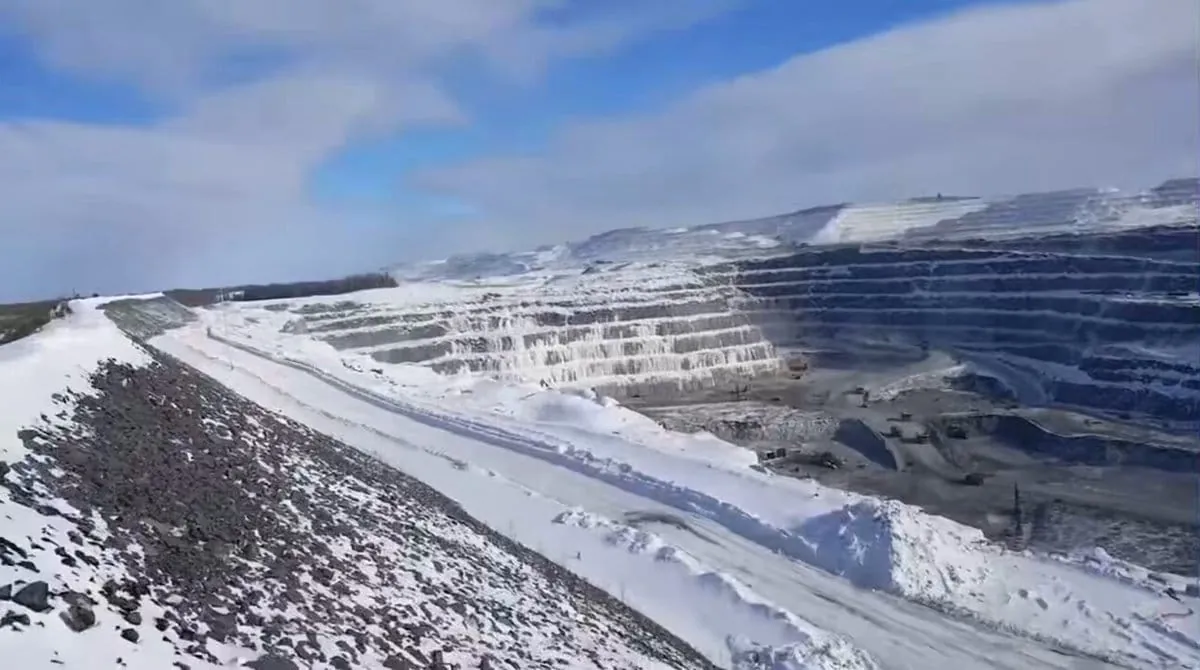
The Canadian Malartic Complex, 25 km west of Val-d’Or, Quebec, is Canada’s second-largest gold mine and one of the biggest gold operations in the world.
— Rick Rule (@RickRuleRulz) January 19, 2025
Three years later, Agnico Eagle and Yamana Gold acquired Osisko in a transaction valued at C$4.1 billion.
I had the opportunity to spend time with Sean Roosen this summer, and in our discussions, I came to appreciate just how much this chapter of his career has stayed with him.
And rightfully so.
Think about the journey from an old mine manager's house and a garage full of drill core to building one of Canada's largest gold mines.
But what makes this story even more remarkable is that the value creation didn't stop there.
In a recent conversation with Sean Boyd, who helped lead Agnico Eagle through the 2014 acquisition of Canadian Malartic, we discussed the remarkable potential of the property.
Boyd explained that Agnico recognized underground potential beyond the existing open-pit operation.
What I found particularly interesting was that subsequent exploration revealed considerably more gold than even the company had originally anticipated.
That is an extraordinary second chapter to an already remarkable story.
A property acquired for roughly $80,000 helped lay the foundation for a multibillion-dollar mining company.
And even after that company was acquired for billions, further exploration continued to reveal value beneath the ground.
I think stories like this deserve more attention.
What has always fascinated me about mining is how much value can be sitting beneath our feet, sometimes for generations, before someone finally recognizes it.
Canadian Malartic is an excellent reminder that even in places explored for decades, there can still be massive opportunities waiting for the right people to see them.
When discoveries like this happen, they can change lives, create opportunities for entire communities and leave a lasting mark on a country's mining history.
And sometimes it all begins with a handful of geologists working out of an old house, logging drill core in the garage, convinced that everyone else has missed something.